
I remember the mirror’s harsh truth each morning. My shoulders sloped unevenly, and a nagging ache pulled at my back. Mild scoliosis had crept into my life, but hope flickered when I found yoga. In this article, I share the yoga poses for mild scoliosis that helped straighten my spine over six months. These moves brought real change, from less pain to better posture.
Mild scoliosis means a side-to-side curve in the spine with a Cobb angle between 10 and 25 degrees. It’s not a full fix like surgery, but yoga acts as a strong sidekick to other treatments. You can expect gains in comfort and alignment if you stick with it. Results vary, so chat with a doctor first.
Understanding Scoliosis and the Role of Targeted Yoga Practice
Yoga targets the body’s imbalances to ease scoliosis symptoms. It builds strength where muscles weaken and stretches tight spots. Over time, this practice can shift your spine toward better balance.
What Exactly is Mild Scoliosis?
The spine normally forms a soft S shape for support. In mild scoliosis, it bends sideways too much. This curve often shows up in teens but can linger into adulthood. Doctors use X-rays to measure it with the Cobb angle. Always get a pro check before you start yoga for scoliosis. Early detection helps catch issues fast.
The Science of Asymmetry: How Yoga Addresses Spinal Imbalance
Scoliosis pulls one side of the body tighter than the other. The concave side shortens, while the convex side stretches out weak. Yoga fights this with poses that stretch the tight muscles and build power on the slack side. Think of it like tuning a crooked guitar string—gentle pulls bring harmony. Studies show consistent practice cuts pain by up to 50% in some folks. Asymmetry in your routine keeps the spine guessing and growing stronger.
Setting Realistic Goals: What Six Months Can Achieve
Don’t aim for a perfect spine overnight. In six months, you might see a small drop in your Cobb angle, say 5 degrees. More key wins include less daily ache and standing taller. Posture improves as muscles even out. Track these shifts to stay motivated. Yoga shines for function, not just looks.
The Core Sequence: Poses for Spinal Elongation and Decompression
Start here to lengthen your spine. These yoga poses for scoliosis decompression lift the compression from the curve. They create space, like opening a tight jar lid.
Mountain Pose (Tadasana) Mastery for Symmetry Awareness
Stand tall in Mountain Pose. Feet hip-width apart, spread your toes. Shift weight to both heels evenly. Reach up through your head’s crown. Check if shoulders and hips line up—use a mirror or wall. For my left curve, I pressed my right foot extra to balance. Practice five breaths. This builds awareness of your tilt. Over weeks, it felt natural, less wobbly.
Forward Folds with Asymmetrical Release (Uttanasana Variations)
Bend forward from the hips in Uttanasana. Let your head hang loose. For scoliosis correction, lift halfway and stretch the shorter side more. If your left is tight, ease into that bend first. Bend your knees if hamstrings pull. Hold for eight breaths. I noticed my right side released faster, easing the pull. This variation prevents forcing the curve deeper.
Cat-Cow Flow (Marjaryasana to Bitilasana) for Spinal Mobility
On hands and knees, flow between Cat and Cow. In Cow, drop your belly and lift your gaze. Round up in Cat, tuck chin. Link each move to your breath—in on Cow, out on Cat. Focus on the stiff side; arch it more if needed. Do ten rounds. This warmed my spine, loosening stuck spots. Pain faded after a month of daily flows.
Targeted Poses for Lateral Curve Correction and Stabilization
These moves hit the curve head-on. They strengthen the weak side and open the tight one. Pick poses based on your curve—left or right matters.
The Power of Supported Side Bends (Parsva Tadasana)
From Mountain, reach arms overhead. Bend sideways away from your curve’s tight side. For a right curve, lean left. Keep hips steady. Use a wall for support if it wobbles. Hold 30 seconds per side. At first, my concave side resisted, but by month three, it stretched smooth. This pose lengthens without strain.
Strengthening the Convex Side with Warrior Poses
Step into Warrior II. Front knee bends, back leg straight. Arms out like a T. Press the back foot’s outer edge if it’s the convex side. Engage your core. Switch sides, but linger longer on the weak one. Five breaths each. My outer hip burned at first—good sign of growth. It built a sturdy base for my spine.
Balancing Poses for Core Engagement and Proprioception
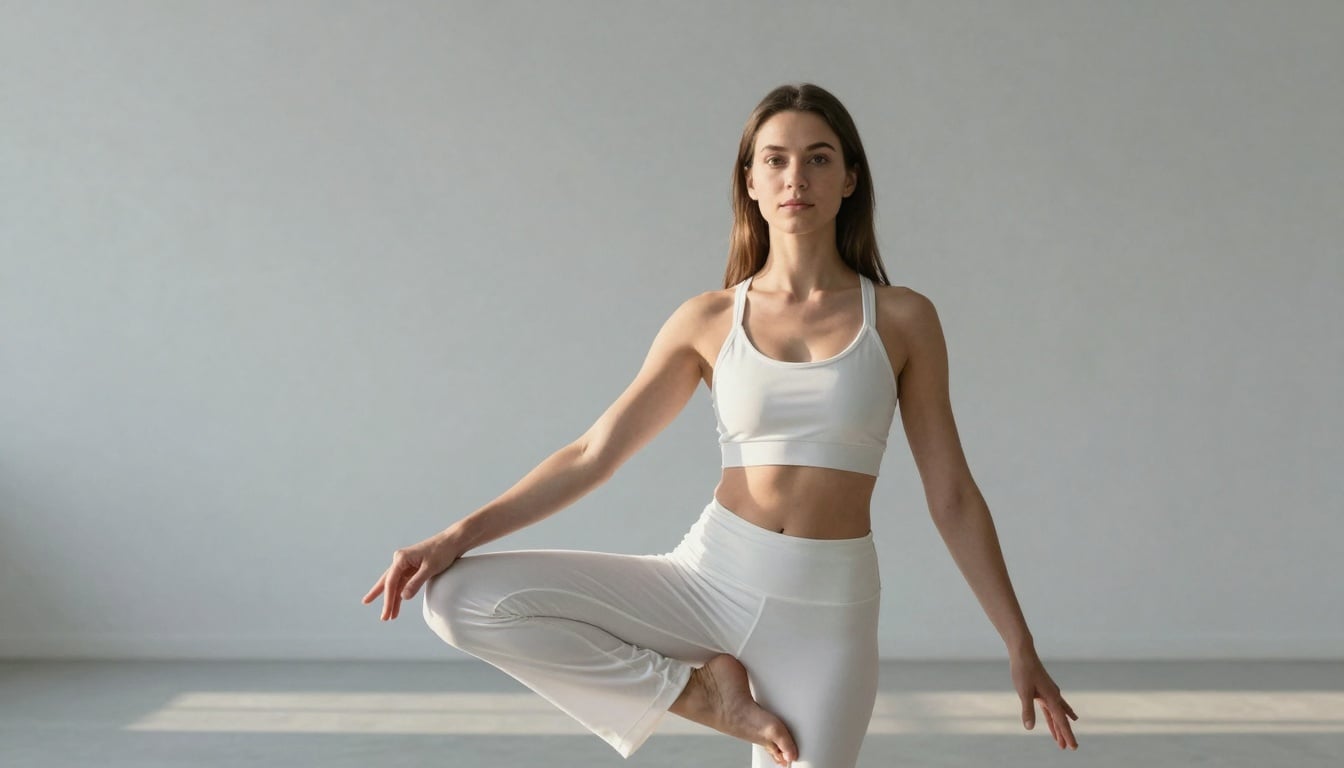
Try Tree Pose. Root one foot, place the other on your calf. Hands at heart or overhead. Draw navel in to fire up deep abs. If balance sways, use a chair. Eagle Pose wraps legs and arms—great for focus. Practice three times per side. These tested my stability, sharpening body sense. Falls happened, but progress stuck.
Integrating Twists and Backbends for Spinal Health
Twists unwind hidden rotations in scoliosis. Backbends open the chest, countering slumps. Blend them in for full spine care.
Gentle Seated Twists to Counter Rotation
Sit cross-legged. Place right hand on left knee. Twist left gently from the belly. Look over your shoulder last. For a left curve, twist right first to open, then left. Five breaths per side. Don’t crank your neck—keep it easy. This eased my mid-back twist over time.
- Start slow to avoid strain.
- Breathe deep into the stretch.
- Use a block under your seat for height.
Supported Backbends for Thoracic Opening
Lie back on a bolster along your spine. Arms out wide, palms up. Let your chest lift naturally. For scoliosis, place extra support under the curve’s dip. Hold five minutes. Fish Pose variation works too—head back gently. My thoracic area felt closed at first; now it blooms open. This counters the forward hunch.
The Importance of Restorative Poses (Savasana & Constructive Rest)
End with Savasana. Lie flat, legs apart, arms relaxed. Scan your body for tension. Or try Constructive Rest: knees bent, feet flat. Hands on belly. Ten minutes lets changes sink in. It’s like hitting reset after a workout. My nervous system calmed, aiding deep healing. Skip this, and gains slip away.
Structuring Your Six-Month Practice Plan
Build a routine that fits your life. Consistency trumps perfection. Track it to see wins build.
Frequency and Duration: Consistency Over Intensity
Aim for four to five days a week. Sessions last 30 to 45 minutes. Short daily hits beat marathon weeks. Warm up with breath, then flow through poses. Cool down in rest. In my plan, mornings worked best—energy high. Stick to it, and changes compound.
- Week 1-4: Focus on basics, 20 minutes.
- Week 5-12: Add targets, build to 40 minutes.
- Month 4+: Integrate all, note improvements.
Listening to Your Body: When to Modify or Skip a Pose
Pain screams stop—sharp twinges mean back off. Stretch feels like a good pull. Modify with props: blocks under hands in folds, straps for warriors. If a pose flares your curve, skip it. I swapped deep twists for gentler ones mid-plan. Props make it safe and effective.
Tracking Progress: Beyond the Mirror
Log pain on a 1-10 scale weekly. Measure shoulder heights monthly with a tape. Note posture ease in daily tasks. Photos help too—front and side views. My ache dropped from 6 to 2 by month six. Celebrate small shifts; they add up.
Conclusion: Sustaining Alignment and Embracing Change
Yoga poses for mild scoliosis changed my curve through elongation, strength, and steady practice. Poses like Mountain and Warrior built balance, while twists and rests sealed the deal. It’s a team effort with your body—listen, adapt, persist.
Keep at it beyond six months for lasting gains. You hold the power to shape your spine’s story. Start today; your straighter self waits. Consult a doc, grab a mat, and move.