
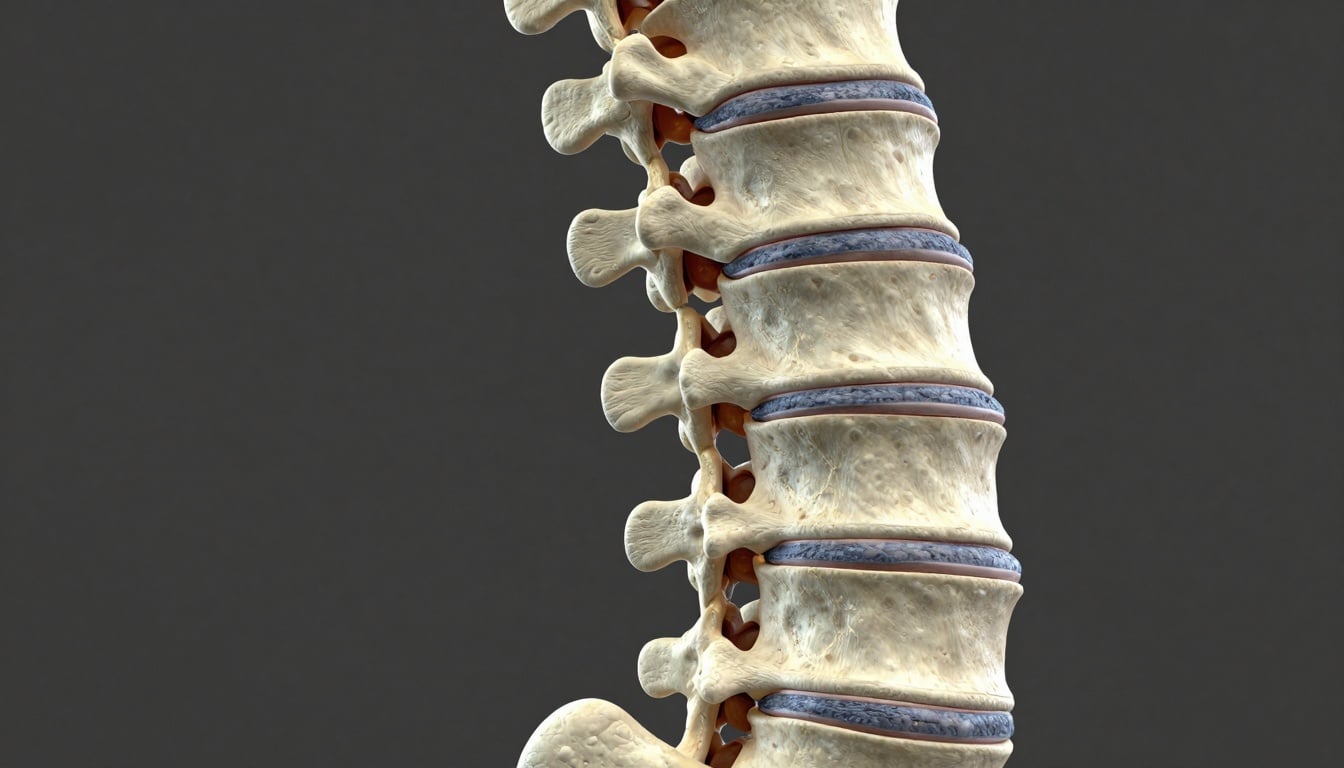
Your spine holds you up. It lets you bend, twist, and walk without a second thought. Think of it as the body’s main support beam, guarding the spinal cord that sends signals to every muscle and nerve. Without its curves, you’d feel every bump in the road like a stiff board. These natural bends—lordosis in the neck and lower back, kyphosis in the upper back—keep you balanced and cushioned. They form an S-shape when you look from the side.
This article breaks down normal spine curvature versus problems that throw it off. You’ll learn signs to watch for, what causes shifts, and steps to fix them. By the end, you’ll know when to see a doctor and how to protect your back.
Section 1: Normal Spinal Anatomy and Curvature
The Three Main Spinal Curves
The spine has three key curves that work together. Cervical lordosis curves inward at the neck, about 20 to 40 degrees. Thoracic kyphosis rounds outward in the upper back, typically 20 to 45 degrees. Lumbar lordosis dips inward in the lower back, around 40 to 60 degrees. From the side, these create a gentle S-shape, not a straight line.
Picture your spine like a coiled spring. It absorbs shocks from running or jumping. Or think of an arch bridge—those curves spread weight evenly so nothing collapses. Without them, your body would jar with each step, leading to pain over time.
These bends start forming in childhood. Babies have a C-shape at birth, from the fetal position. As they lift their heads and sit up, the curves develop for better support.
What is Ideal Spinal Alignment?
Look at the spine from behind, and it should line up straight, like a plumb line down the middle. No big shifts left or right. From the side, those S-curves appear smooth and balanced. Too much or too little bend means trouble.
Doctors use the Cobb angle to measure curves on X-rays. For a healthy thoracic kyphosis, it’s under 45 degrees. Lumbar lordosis stays below 60 degrees. These ranges help spot if your spinal curvature falls into normal bounds or needs a check.
Good alignment keeps pressure even on discs and joints. It eases strain on muscles. If off, you might slouch or feel uneven hips.
The Role of Intervertebral Discs and Vertebrae
Vertebrae are the 33 bones stacked in your spine. They form the frame. Between them sit intervertebral discs—soft, jelly-like cushions. These discs let you move while holding the curves in place.
Discs soak up impact, like shock absorbers in a car. They keep space between bones so nerves don’t pinch. Healthy discs maintain the spine’s natural lordosis and kyphosis.
As you age, discs can dry out. But in youth, they flex well. Strong vertebrae and plump discs equal a stable spinal curvature.
Section 2: Common Disorders of Abnormal Spinal Curvature
Scoliosis: The Sideways Curve
Scoliosis means a side-to-side bend in the spine, over 10 degrees. It twists like a question mark. Structural scoliosis comes from bone changes and stays put. Non-structural types fix with posture tweaks, often from muscle issues or pain.
Most cases hit teens: adolescent idiopathic scoliosis (AIS). No clear cause, but it affects girls more. Curves worsen during growth spurts, up to 3% of kids get it.
To spot it early, try the Adam’s Forward Bend Test. Bend forward at the hips, arms dangling. A hump on one side signals a possible curve. See a doctor if you notice this—early catch helps.
Kyphosis: Excessive Forward Rounding
Kyphosis rounds the upper back too much, over 45 to 50 degrees. It gives that hunchback look. Postural kyphosis comes from slouching; you can fix it by standing tall. Scheuermann’s disease hits teens, wedging vertebrae for a fixed curve.
Causes include weak back muscles or growth plate issues. In adults, fractures from osteoporosis boost the hunch. Daily habits play a role too.
Take “tech neck” from hours on phones. It pulls the head forward, worsening kyphosis. Workers at desks often develop it after years of poor setup.
Lordosis: Excessive Lower Back Sway
Lordosis sways the lower back too far in, called swayback. The belly sticks out, butt behind. It strains hips and knees. Normal lumbar curve is fine; excess over 60 degrees hurts.
Weak abs and tight hip flexors cause it. Extra weight in the belly pulls the pelvis forward. Pregnancy or bad habits like arching while standing add to it.
Athletes with strong backs but weak cores might sway more. Desk jobs tighten hips, tipping the balance.
Section 3: Causes and Risk Factors for Spinal Deformity
Congenital and Developmental Causes
Some curves start at birth. Congenital scoliosis forms from misshaped vertebrae in the womb. Bones fuse wrong, creating bends early. Kids with these need close watch as they grow.
Genes play a part too. If family members had idiopathic scoliosis, your risk jumps. Studies show twins often match curves, pointing to heredity.
Growth unevenness can twist the spine. One side lengthens faster, pulling it sideways.
Acquired and Degenerative Causes
Later in life, wear and tear shifts curves. Osteoporosis weakens bones, causing fractures that hunch the back. Each collapse adds kyphosis degrees.
Degenerative disc disease flattens cushions, changing lordosis. Arthritis stiffens joints, altering alignment.
Neuromuscular issues like cerebral palsy or muscular dystrophy weaken muscles. The spine curves without support. These progress fast without care.
Lifestyle and Postural Contributors
You control some risks. Slumping at a desk builds muscle imbalances. Long hours sitting shortens hip flexors, sways the low back.
Sports with heavy loads, like weightlifting, strain if form slips. Poor sleep posture on soft beds adds subtle shifts.
Research from orthopedics shows decades of bad habits compound. One study found office workers with 20% more kyphosis after 10 years. Stand often. Stretch. It helps.
Section 4: Diagnosis and Medical Assessment
Diagnostic Imaging Techniques
X-rays are key for spinal curvature checks. Standing films show true alignment under gravity. Doctors measure Cobb angles here—draw lines on vertebrae ends, see the tilt.
Supine X-rays spot flexible curves. MRI dives deeper for soft tissues, like pinched nerves or tumors. Use it if pain shoots down legs.
CT scans detail bones if surgery looms. They catch hidden fractures.
Clinical Evaluation and Physical Examination
Doctors test your range of motion first. Bend side to side, forward and back. They check nerve function with reflexes and strength tests.
Leg length differences? They measure hips. Uneven shoulders or ribs hint at scoliosis. Palpate the spine for tender spots.
For AIS, intervention kicks in at 10-15 years if curves hit 25 degrees. Painless curves still need tracking.
When to Consult a Specialist
See a pro if one shoulder sits higher. Or if clothes hang uneven. Persistent back pain, especially with numbness, means go now.
Rapid curve growth in kids demands quick action. Adults with new hunch or sway should check too. Don’t wait—early fixes save hassle.
Section 5: Treatment Options for Spinal Curvature Management
Non-Surgical Management Strategies
Start with conservative steps. Physical therapy builds core strength for kyphosis and lordosis. Focus on back extensions and stretches to even curves.
Bracing suits scoliosis in growing kids with 20-40 degree bends. Worn 16 hours daily, it halts worsening. Types like Boston brace hug the torso.
Try these exercises:
- Cat-cow pose: On hands and knees, arch and round your back 10 times.
- Pelvic tilts: Lie down, flatten low back against floor, hold five seconds.
- Bird-dog: Extend opposite arm and leg, balance for balance.
Pain meds and heat ease symptoms short-term.
Surgical Intervention Criteria and Procedures
Surgery fits severe cases: curves over 50 degrees, quick progression, or organ pressure. For scoliosis, it straightens and fuses bones.
Spinal fusion joins vertebrae with rods and screws. It stops bends but limits flex a bit. Goals: reduce pain, improve looks.
Risks include infection, but success rates top 90% for pain relief.
Rehabilitation Post-Treatment
After brace or knife, therapy rebuilds strength. Swim or walk to keep mobile. Core work prevents new issues.
Follow-ups track curves yearly. Adjust habits for life. Strong posture lasts.
Conclusion: Maintaining a Healthy Spinal Blueprint
Normal spinal curvature supports daily life with its S-bends. Problems like scoliosis, kyphosis, or lordosis disrupt that balance. Causes range from genes to slouching, but most respond to early care.
Catch issues young, especially in teens, for best outcomes. Bracing or therapy often suffices. Watch for asymmetry or pain.
You hold power over your spine. Stand tall, exercise cores, and seek help promptly. A healthy back lets you move free for years. If worried, book that doctor visit today.